SJAC Mission Statement:
The Social Justice at the Convention (SJAC) Committee is committed to the principles of diversity, inclusion, equity, fairness, access, and equal representation in all aspects of our profession and in all the communities that we inhabit. We promote and advance these principles through education and activism at our annual convention: opposing racism and other forms of systemic oppression, providing forums for those whose voices have been silenced or marginalized, and promoting cultural change that will guarantee equal opportunities for all, regardless of race, gender, religion, sexuality, or national origin.
Committee Members
Gabrielle Kelenyi, Co-Chair (2024–2026)
Virginia Schwarz, Co-Chair (2024–2026)
2026 Co-Chair (Local Arrangements Chair)
Antonio Byrd (2025–2028)
Erin Green (2025–2028)
Wyatt Paige Hermansen (2025–2028)
Kathleen Lyons (2025–2028)
Nicole Ramer (2021–2026)
Tiffany Lynn Wong (2025–2028)
Committee Charge
Social Justice at the Convention Committee (SJAC)
General Charge: Promotes and advances principles of diversity, inclusion, equity, fairness, access, and equal representation in all aspects of the profession and in all the communities that are inhabited through education and activism at the Annual Convention.
Responsibilities
- Works with the Associate Chair to understand their vision for the CCCC Annual Convention and to collaboratively outline a scope for the SJAC’s efforts at the convention.
- Collaborates with the Local Arrangements Committee Chair, CDICC, and CCCC Caucuses to develop social justice and local engagement activities that complement the convention theme.
- Promotes participation and engagement in SJAC-sponsored activities at the CCCC Annual Convention and supports an inclusive conference culture.
- Creates opportunities for CCCC attendees to connect with activist communities in convention cities.
- Sponsors an annual panel that features local activists and organizations.
Membership
- Members will serve three-year terms.
- Chair: Selects members in consultation with administrative committee chairs and is responsible for fulfilling or delegating its charges.
- Members: Assist Chair in fulfilling the responsibilities of its charges.
Social Justice at the Convention Case Study, Hazelwood, Pittsburgh, Pennsylvania (PDF)
 Rachael W. Shah is an assistant professor of English at University of Nebraska–Lincoln, where she teaches graduate and undergraduate courses in community literacy, public rhetoric, and teacher education. Her current book project explores community perspectives of university-community partnerships. Former director of the Wildcat Writers program, she now coordinates a similar program called Husker Writers in Nebraska.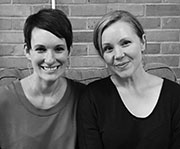
 V. Jo Hsu is an assistant professor of English and the associate director of the Program in Rhetoric and Composition at the University of Arkansas. Their research and teaching focus on the interrelations among identity, narrative writing, and struggles for social justice. Their current project examines intergenerational narratives among queer Asian Americans and considers what these archives can teach us about our cultural and academic institutions, as well as how they might help us envision more inclusive pedagogical theories and practices. Jo has yet to find a third-person pronoun that feels entirely like home.
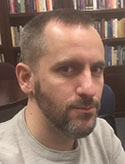
 James Rushing Daniel is a lecturer in the Interdisciplinary Writing Program at the University of Washington. His research has appeared in College English, Philosophy & Rhetoric, and Composition Studies, among other venues.
 Ira J. Allen is assistant professor of rhetoric, writing, and digital media studies at Northern Arizona University, and formerly assistant professor of rhetoric and composition at the American University of Beirut (where he directed the Writing Center and Writing in the Disciplines). He publishes regularly on rhetoric, democracy, ethics, and writing and has translated works by Nietzsche, Walter Benjamin, and Werner Hamacher, among others. His book The Ethical Fantasy of Rhetorical Theory explores the meanings and utility of rhetorical theory for scholars across the humanistic disciplines.